Robotics · Computer Vision · Trajectory Planning
Vision-Based Robotic Manipulator
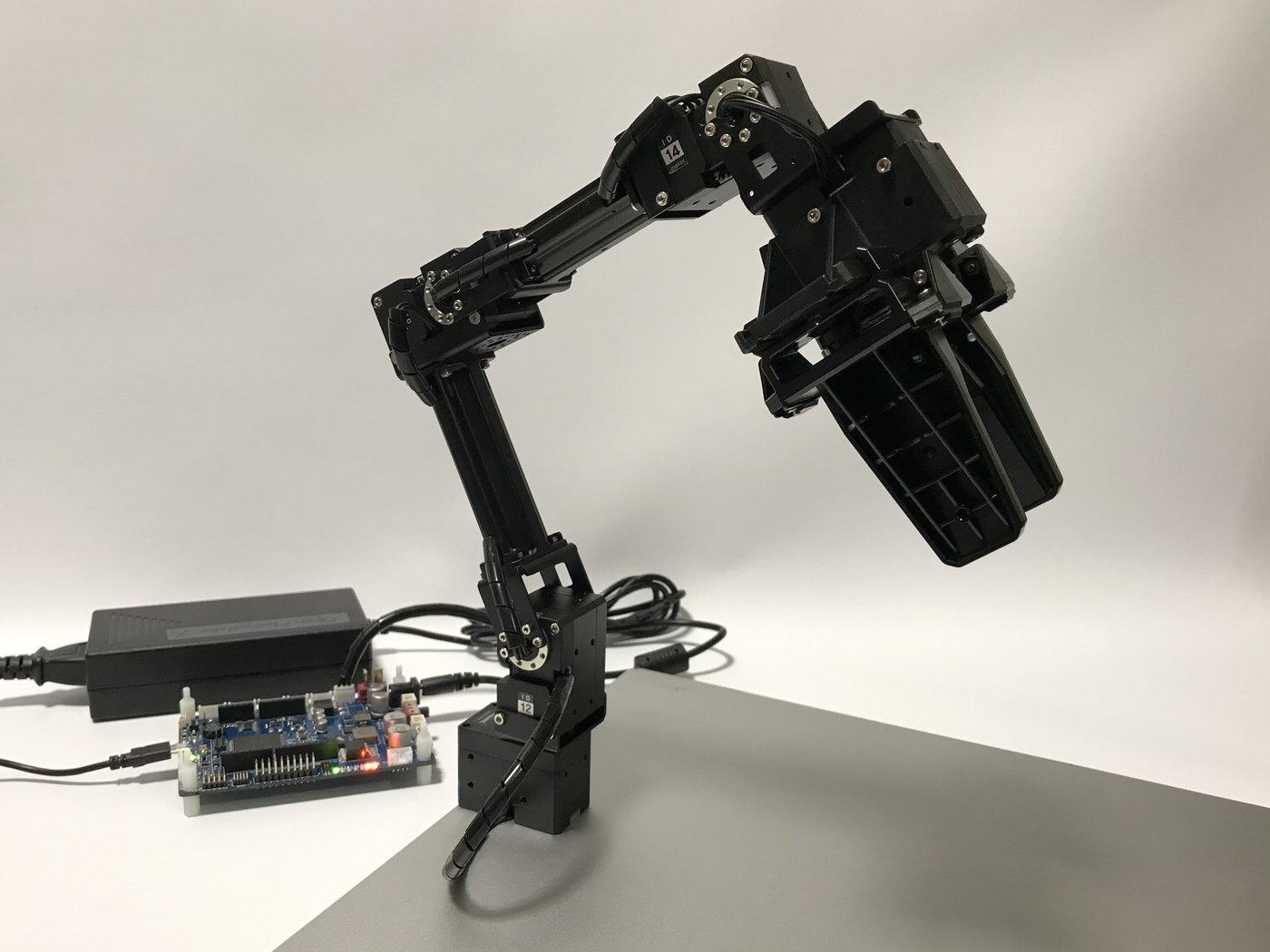
A vision-guided pick-and-place sorting system on the OpenManipulator-X: find coloured balls, work out where they are in 3D, plan a path, pick them up, and sort them by colour.
A note on authorship
This was structured coursework. The course framework, starter code, and hardware interface classes were written by Prof. Siavash Farzan of the Cal Poly Electrical Engineering Department — the robot and camera interface classes carry his copyright header directly, and the trajectory planner shipped as a skeleton with the methods left to be filled in.
Students implemented the designated algorithm functions inside that scaffolding. What this page documents is the topics I studied and the system I got working — not a claim of having authored the surrounding codebase.
The system
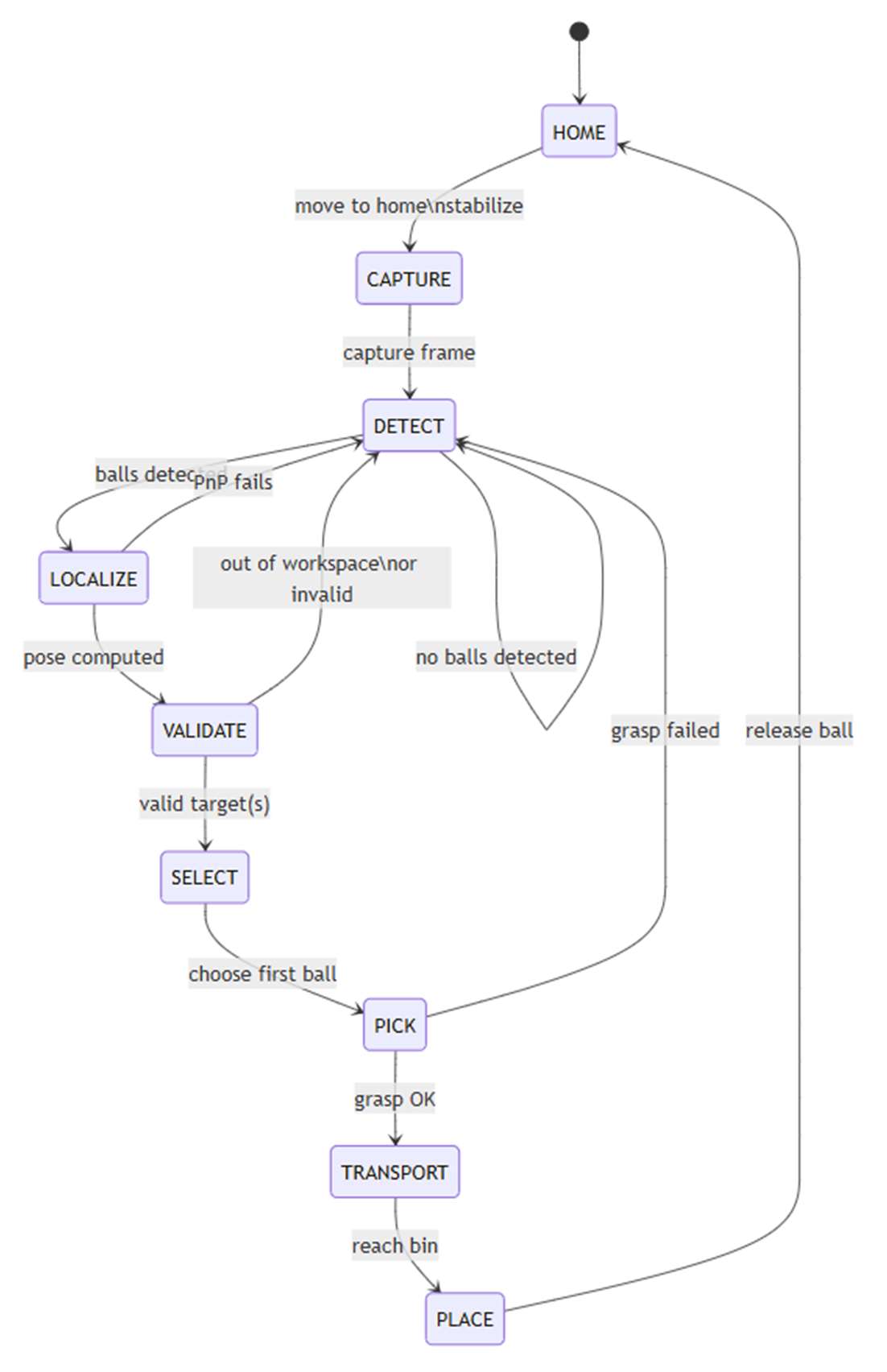
Five stages, end to end.
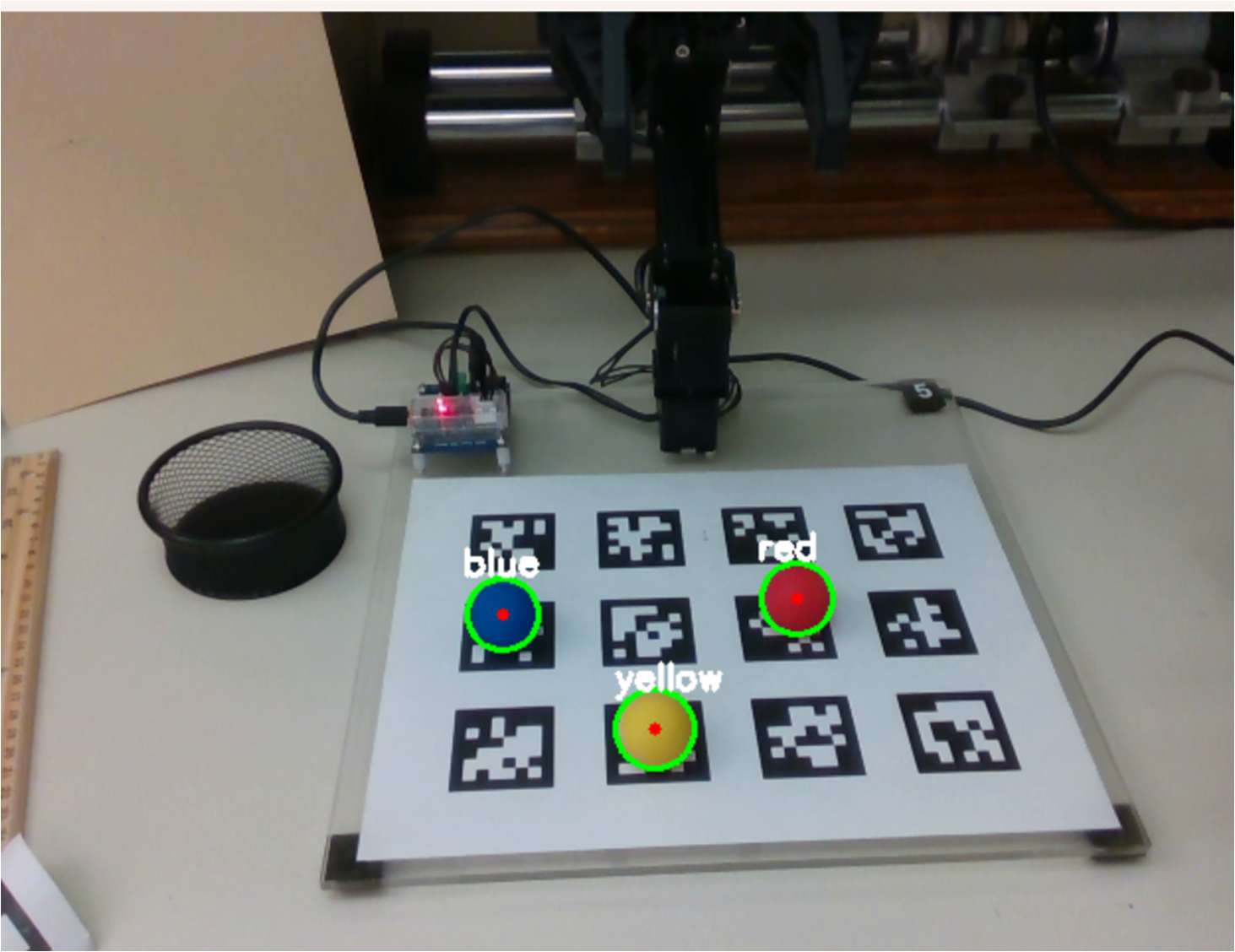
- Detect coloured spherical objects in the camera frame.
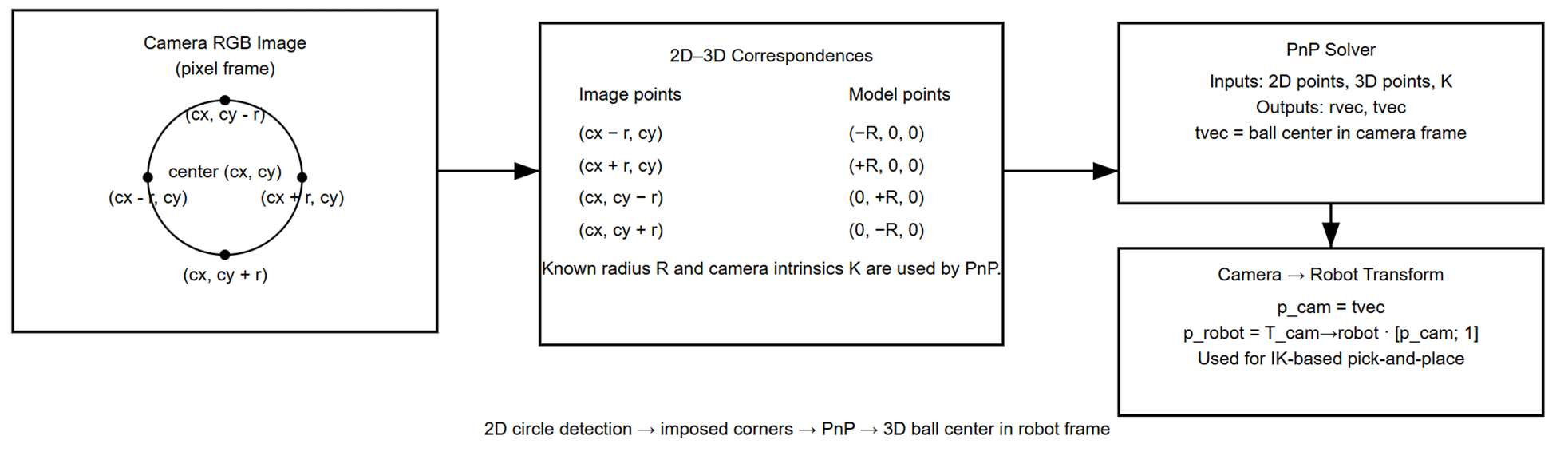
- Estimate their 3D position relative to the robot base.
- Plan a smooth, collision-free trajectory to each one.
- Grasp the ball with the OpenManipulator-X gripper.
- Sort it into the matching colour-coded bin.
How the rig is set up
The camera is not mounted on the arm. It sits on a separate stand, propped above the workspace and aimed down at the arm's stand and the board in front of it — an eye-to-hand configuration, where the camera watches the robot rather than moving with it. That fixed vantage is what makes the AprilTag calibration meaningful: once the transform between camera frame and robot base frame is solved, it stays valid for the whole run.
Both the camera and the arm are wired back to the same laptop. The laptop runs the perception and planning code, pulls RGB-D frames from the camera over USB, and drives the arm's controller over its own serial link — so the full perceive-plan-act loop closes on the host machine rather than on any embedded controller.
The earlier labs in the course built each piece separately — communication and position control, forward and inverse kinematics, task-space and joint-space polynomial trajectories, Jacobian-based differential motion, camera-to-robot calibration with AprilTags, and position-based visual servoing. The final lab was the one that required putting them together and making the combination hold up: detection robustness, workspace safety, error mitigation, and iterative closed-loop testing.
Perception
Finding the ball.
Demonstration
Sorting, start to finish.
Three coloured balls detected, picked, and sorted into their bins. Silent — the audio track has been removed.